Introduction
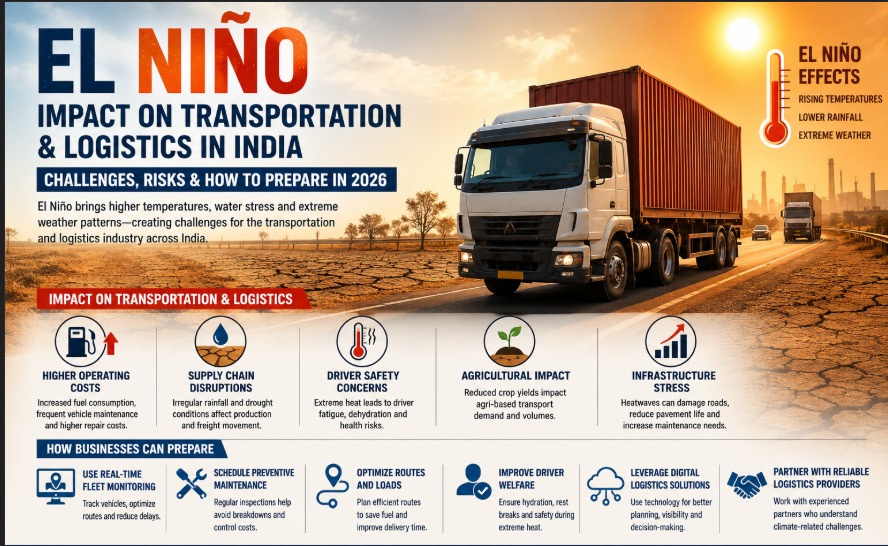
The El Niño weather phenomenon is expected to influence weather patterns across India in 2026. While most discussions focus on agriculture and water resources, El Niño can also have a significant impact on the transportation and logistics industry.
Rising temperatures, water shortages, increased fuel consumption, and disruptions in supply chains can create operational challenges for businesses that depend on road transportation.
What is El Niño?
El Niño is a climate pattern caused by the warming of sea surface temperatures in the Pacific Ocean. It affects rainfall patterns and temperatures around the world, including India.
Typical effects include:
- Reduced rainfall in some regions
- Higher temperatures
- Drought-like conditions
- Water scarcity
- Increased pressure on infrastructure
How El Niño Affects Transportation and Logistics
Increased Vehicle Operating Costs
Extreme temperatures increase engine stress and fuel consumption.
Transport companies may experience:
- Higher maintenance costs
- Increased tyre wear
- More frequent cooling system repairs
Supply Chain Disruptions
Agriculture, manufacturing, and industrial sectors may experience production fluctuations due to weather-related challenges.
This can affect:
- Freight demand
- Delivery schedules
- Inventory planning
Driver Safety Concerns
Heatwaves create difficult working conditions for truck drivers.
Common challenges include:
- Driver fatigue
- Dehydration
- Reduced productivity
- Increased health risks
Impact on Agricultural Transportation
Lower crop production in some regions may affect transportation volumes and freight movement related to agricultural products.
Rising Fuel Consumption
Vehicles operating in extreme heat often consume more fuel due to increased air conditioning usage and engine stress.
How Logistics Companies Can Prepare
Use Real-Time Fleet Monitoring
GPS tracking and telematics help monitor vehicle performance.
Schedule Preventive Maintenance
Regular inspections help reduce unexpected breakdowns.
Optimize Transportation Routes
Avoid unnecessary delays and reduce fuel consumption.
Improve Driver Welfare
Provide adequate rest breaks, hydration support, and safety measures.
Leverage Digital Logistics Platforms
Technology-driven logistics systems help improve operational efficiency and visibility.
Benefits of Technology During Climate Challenges
Modern logistics platforms provide:
- Real-time shipment tracking
- Faster vehicle allocation
- Better route planning
- Improved fleet utilization
- Enhanced supply chain visibility
Conclusion
El Niño is more than a weather event—it can influence transportation costs, fleet performance, driver safety, and supply chain operations.
Businesses that adopt technology, improve planning, and partner with reliable logistics providers can minimize disruptions and maintain smooth freight movement.