Streamlining B2B Transport Services: A Case Study in Factory Logistics
Let me paint a picture for you. The production line is humming, churning out finished goods at an incredible rate. Pallets are stacking up. But over in the dispatch office, it’s controlled chaos. The logistics manager is frantically making calls, chasing down brokers, and trying to find a reliable truck. This isn’t a hypothetical; it’s the daily reality for countless manufacturing plants. The truth is, world-class production means nothing if your goods are stuck at the factory gate. This gap between production and delivery is where many businesses bleed money and efficiency, and it highlights the critical need for specialized B2B transport services. We recently partnered with a major automotive component manufacturer facing this exact crisis, and their story is a powerful lesson in transforming a chaotic supply chain into a competitive advantage.

This isn’t just about moving boxes from Point A to Point B. It’s about the intricate dance of timing, reliability, and information that underpins modern manufacturing. When that dance is out of sync, the entire operation falters. This case study breaks down how we diagnosed the deep-seated issues in their logistics and implemented a technology-driven solution that delivered measurable results.
The Hidden Costs of Old-School Manufacturing Logistics
For decades, factory logistics ran on a network of personal relationships, phone calls, and a whole lot of trust. You had your list of brokers and transporters. You’d call, haggle, and hope for the best. While that system worked (mostly), it’s incredibly inefficient and opaque in today’s fast-paced industrial environment.
We see it all the time. The hidden costs aren’t on any single invoice. They’re buried in:
- Production Delays: A truck that’s a day late can halt an entire assembly line at the destination, triggering penalty clauses and damaging client relationships.
- Excessive Admin Time: Your logistics team shouldn’t be spending 70% of their day playing phone tag. Their expertise is better used in planning and optimization, not just booking.
- Lack of Visibility: Once a truck leaves the gate, it often enters a black hole. You don’t know where it is or if it’s on schedule, leading to constant follow-up calls and anxiety for both you and your customer.
- Premium Freight Spikes: When a scheduled truck fails to show up, you’re forced to book a last-minute replacement at a huge premium. These unexpected costs can decimate your profit margins on a shipment.
The reliance on this outdated model creates a system riddled with vulnerabilities. It’s a reactive approach in a world that demands proactive management. The fundamental problem is a lack of control and data.
The Challenge: A Chennai Auto Parts Factory at a Breaking Point
Our client, a major Tier-1 automotive supplier located in the bustling industrial corridor of Sriperumbudur near Chennai, was a textbook example of this problem. They manufacture critical components for several large car brands. Their production was top-notch, but their logistics were in constant triage mode. They were hemorrhaging money and goodwill due to an unreliable transport system.
Manual Booking Mayhem
Their process for securing industrial cargo transport was entirely manual. A team of two coordinators managed a spreadsheet of over 50 different small-time brokers and transport owners. Every single day, they would start making calls to find available trucks for their daily dispatch of 20-30 loads. This created a bidding war in reverse, where availability—not quality or price—was the main driver. They had no guaranteed capacity, especially when they needed urgent machinery transport Chennai services for plant equipment.
The Visibility and Reliability Black Hole
Once a truck was loaded, the information flow stopped. Drivers’ phones were often unreachable, and ETAs were little more than educated guesses. This was particularly stressful for their customers—the major auto assembly plants—that operated on strict Just-in-Time (JIT) schedules. A delay from our client’s factory could shut down a multi-million-dollar assembly line. The lack of reliable warehouse transport services between their production warehouse and the final assembly plant was causing serious friction with their most important customers.
I remember the Plant Head telling me, “I spend more time worrying about trucks than I do about our production quality. We have to fix this.” That’s a massive red flag. When logistics issues reach the C-suite, you know the problem is systemic.
The Droptruck Intervention: More Than Just an App for Industrial Truck Booking
When we first engaged with the client, they thought they just needed a better list of transporters. What they actually needed was a fundamental shift in how they managed their outbound logistics. Simply throwing more trucks at the problem wouldn’t solve it. The solution had to be strategic, technology-enabled, and tailored to their specific needs for handling bulk goods transport.
A Tailored Fleet for Industrial Needs
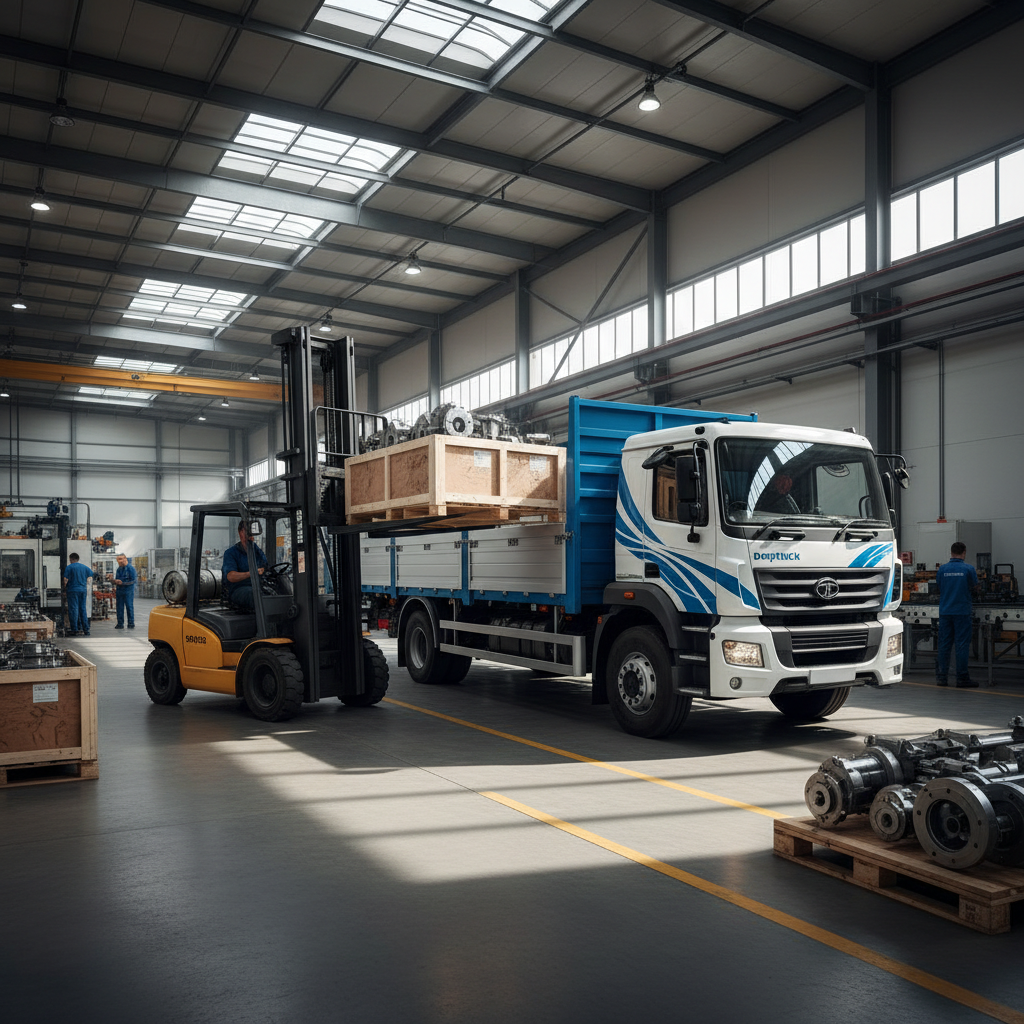
First, we moved away from the open market free-for-all. We analyzed their typical load profiles—specific pallet sizes, weights, and handling requirements. We then curated a dedicated fleet of vehicles from our network of verified partners specifically for their routes. This meant they always had access to the right type of vehicle, from 32 ft multi-axle trucks for high-volume components to 19 ft flatbeds for occasional machinery moves. This dedicated approach to industrial truck booking immediately solved their primary issue: vehicle availability.
Real-Time Data Replaces Guesswork
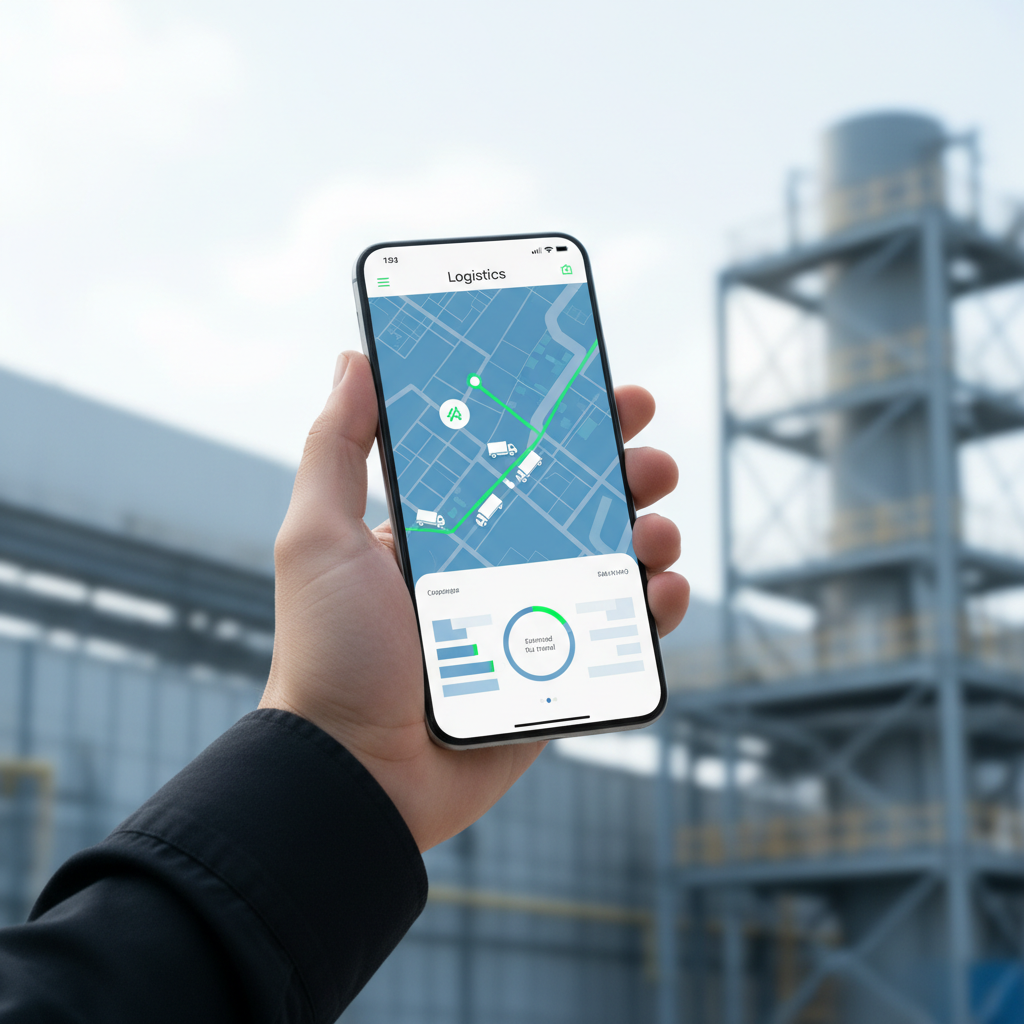
The game-changer, however, was technology. We onboarded them onto the Droptruck platform. Instantly, their logistics team went from a chaotic call center to a centralized command center.
- Live Tracking: Every vehicle was GPS-enabled. Their team could see exactly where every shipment was on a map, 24/7. No more chasing drivers.
- Automated Alerts: The system automatically sent alerts for key milestones: vehicle placed, loaded, in-transit, and delivered. Their customers could also be given tracking links, providing proactive transparency.
- Digital Proof of Delivery (ePOD): As soon as the goods were delivered, the signed POD was uploaded via the driver’s app. This slashed their billing cycle time from weeks to days.
This wasn’t just about adding an app; it was about re-architecting their entire workflow around a central source of truth. We provided a dedicated account manager to oversee the transition and act as a single point of contact, eliminating the need to manage dozens of vendors.
What We See in Practice: The Ripple Effect of Reliable B2B Transport Services
In my 15+ years in this industry, I’ve seen one thing consistently: when you fix transport, you fix a lot more than just transport. A reliable logistics backbone has a profound, positive ripple effect across the entire organization. For our client in Chennai, the benefits went far beyond the dispatch office.
The production planning team could finally trust the dispatch schedule, leading to smoother handoffs and less congestion in the finished goods area. The finance department saw a dramatic improvement in cash flow because billing cycles shrank thanks to instant PODs. Most importantly, the sales team could confidently promise delivery dates to their customers, strengthening those crucial relationships. Even employee morale on the logistics team improved; they were no longer firefighters but strategic operators.
The Tangible Results: Hard Numbers and Real-World Impact
After a six-month implementation and stabilization period, the results were not just positive; they were transformative. The data spoke for itself.
- 22% Reduction in Overall Logistics Costs: Achieved through optimized routing, elimination of premium freight, and better rate negotiation via a consolidated provider.
- 35% Decrease in Vehicle Placement Time: Trucks were placed within hours of the request, not days. This was a direct result of the dedicated fleet and efficient industrial truck booking platform.
- 98.5% On-Time Delivery Rate: Up from an estimated 75-80%. This was the single most important metric for their customers and the biggest factor in repairing relationship trust.
- 80% Reduction in Admin Overheads: The logistics team’s time spent on manual booking and follow-up calls was virtually eliminated, allowing them to focus on higher-value tasks.
The client moved from a position of weakness—where transport was a constant risk—to a position of strength, where their hyper-reliable manufacturing logistics became a selling point.
An Expert Framework for Choosing a Commercial Logistics Provider
How can you replicate this success? When evaluating a commercial logistics provider, especially for complex factory needs, don’t get distracted by a slick sales pitch. I recommend using what I call the “VTA Framework” — Verification, Technology, and Adaptability.
- Verification: How thoroughly do they vet their vehicles and drivers? Ask about their compliance checks, insurance verification, driver training, and vehicle maintenance standards. A cheap truck from an unverified source is a massive liability.
- Technology: Are they providing a true data platform or just a fancy booking app? Look for real-time tracking, data analytics, automated reporting, and integration capabilities. Technology should provide visibility and control, not just digitize an old process.
- Adaptability: Your needs will change. Does the provider have a diverse fleet to handle everything from {{internal_link:part-load transportation}} to oversized machinery? Can they scale up during your peak season? A rigid partner who can’t adapt to your business’s rhythm is a partner who will eventually fail you.
Applying this simple framework can help you cut through the noise and find a partner who offers genuine, tech-enabled B2B transport services, not just a brokerage with a website.
The journey of this Chennai auto parts manufacturer is a powerful reminder that logistics isn’t a cost center; it’s a critical enabler of growth and customer satisfaction. By shifting from a chaotic, manual system to a strategic, technology-driven partnership with Droptruck, they didn’t just save money—they built a more resilient, competitive, and ultimately more profitable business. They stopped just moving parts and started moving their business forward.
Ready to Transform Your Factory’s Logistics?
If your dispatch office feels more like a frantic call center than a strategic hub, it’s time for a change. Don’t let outdated transport methods cap your production potential. {{internal_link:Schedule a complimentary logistics audit}} with our industrial transport experts. We’ll analyze your current operations and provide a no-obligation roadmap to reduce costs and improve reliability, just like we did for our client in Chennai.
Frequently Asked Questions
What are B2B transport services?
B2B (business-to-business) transport services involve the movement of goods, raw materials, or equipment from one business to another. Unlike B2C logistics, it often involves bulk shipments, specialized vehicles (like flatbeds or container trucks), and focuses on integrating with the client’s supply chain, such as in manufacturing or warehouse distribution.
How does industrial truck booking work with a platform like Droptruck?
Instead of manually calling brokers, you use a digital platform to post your load requirements. The platform matches your need with a verified truck from its network, providing upfront pricing, real-time tracking, and digital documentation. This streamlines the entire process from booking to delivery confirmation.
Why is real-time tracking so important for manufacturing logistics?
For manufacturers, especially those using Just-in-Time (JIT) inventory systems, knowing the exact location of an inbound or outbound shipment is critical. Real-time tracking allows production and receiving teams to plan precisely, preventing costly downtime and improving overall operational efficiency.
Can you handle specialized machinery transport in Chennai?
Yes. A capable commercial logistics provider will have access to specialized vehicles like flatbeds, low-bed trailers, and semi-bed trailers required for safe and secure machinery transport. They also manage the specific loading, lashing, and unloading protocols necessary for high-value industrial equipment in areas like Chennai’s industrial hubs.
What’s the difference between a logistics provider and a traditional broker?
A traditional broker primarily acts as a middleman, connecting shippers with carriers, often with limited visibility or accountability. A modern logistics provider, like Droptruck, acts as a partner, using technology to offer a managed service with verified carriers, real-time tracking, data analytics, and a single point of responsibility for the entire shipment lifecycle.
From an SEO execution perspective, improving B2B transport services is usually where we see the strongest compounding gains over 3-6 months.
From an SEO execution perspective, improving B2B transport services is usually where we see the strongest compounding gains over 3-6 months.
From an SEO execution perspective, improving B2B transport services is usually where we see the strongest compounding gains over 3-6 months.
Frequently Asked Questions
What are B2B transport services?
B2B (business-to-business) transport services involve the movement of goods, raw materials, or equipment from one business to another. Unlike B2C logistics, it often involves bulk shipments, specialized vehicles (like flatbeds or container trucks), and focuses on integrating with the client’s supply chain, such as in manufacturing or warehouse distribution.
How does industrial truck booking work with a platform like Droptruck?
Instead of manually calling brokers, you use a digital platform to post your load requirements. The platform matches your need with a verified truck from its network, providing upfront pricing, real-time tracking, and digital documentation. This streamlines the entire process from booking to delivery confirmation.
Why is real-time tracking so important for manufacturing logistics?
For manufacturers, especially those using Just-in-Time (JIT) inventory systems, knowing the exact location of an inbound or outbound shipment is critical. Real-time tracking allows production and receiving teams to plan precisely, preventing costly downtime and improving overall operational efficiency.
Can you handle specialized machinery transport in Chennai?
Yes. A capable commercial logistics provider will have access to specialized vehicles like flatbeds, low-bed trailers, and semi-bed trailers required for safe and secure machinery transport. They also manage the specific loading, lashing, and unloading protocols necessary for high-value industrial equipment in areas like Chennai’s industrial hubs.
What’s the difference between a logistics provider and a traditional broker?
A traditional broker primarily acts as a middleman, connecting shippers with carriers, often with limited visibility or accountability. A modern logistics provider, like Droptruck, acts as a partner, using technology to offer a managed service with verified carriers, real-time tracking, data analytics, and a single point of responsibility for the entire shipment lifecycle.